Integrated Landscape Design & Outdoor Wellness Spaces

Beyond the Pretty Patio: Your Guide to Designing an Outdoor Wellness Space
You’ve scrolled through hundreds of patio photos on Houzz and pinned countless ideas. Yet, something feels missing. The endless galleries of fire pits and pergolas offer inspiration, but they don't answer the deeper question you're asking: How do I create an outdoor space that genuinely makes me feel better?
This is the critical gap most design content fails to address. It focuses on aesthetics the "what" while ignoring the profound impact design has on our well-being the "why." The search for the perfect patio is often a hidden search for a personal sanctuary, a place to de-stress, connect with loved ones, and improve your mental health.
As our research shows, the most popular design sites are saturated with visually-driven listicles that are interchangeable and surface-level. They don't explain why certain layouts promote relaxation or how specific elements can reduce anxiety.
We're moving beyond decoration to explore the science of intentional, wellness-focused landscape design. Here, you won't just find ideas; you'll find a framework for creating an outdoor environment that serves as a true extension of your well-being.
The Foundation: Core Principles of a Wellness Landscape
A truly restorative outdoor space isn't an accident of pretty furniture and potted plants. It’s built on proven principles that tap into our innate connection with nature. This is the essence of biophilic design an approach that integrates natural elements and patterns into the built environment to enhance our physical and mental health.
Competitors show you a picture of a cozy nook but fail to explain the psychology behind why it feels safe and calming. Let’s explore the principles that actually create that feeling.
Principle 1: Prospect and Refuge
This is a foundational concept in environmental psychology. "Prospect" refers to having an unimpeded view of your surroundings, which appeals to our primal need to see without being seen. "Refuge" is about having a protected, secure space to retreat to. An ideal wellness space balances both.
- How to Apply It: Create a comfortable, partially enclosed seating area (refuge), like a pergola-covered deck or a chair tucked into a corner of lush greenery. Position it so it overlooks an open area of your yard or a distant view (prospect). This combination creates a powerful sense of secure relaxation.
Principle 2: Seamless Indoor-Outdoor Connection
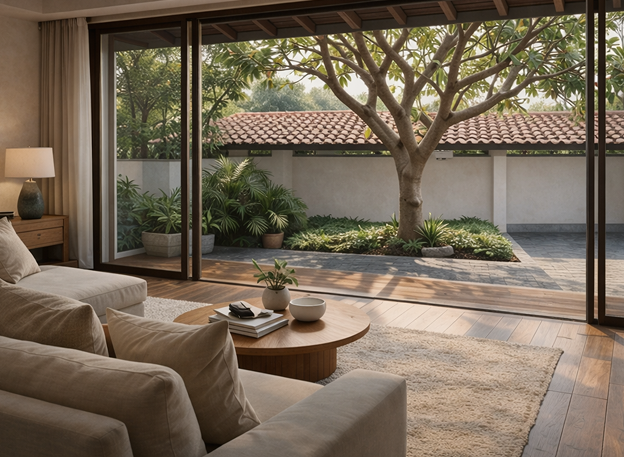
Blurring the lines between your indoor and outdoor living areas makes both feel larger and more integrated. This is more than just installing large glass doors; it's about creating a cohesive flow that encourages you to move effortlessly between the two. Research consistently shows that user interest in creating a seamless transition is a growing trend, yet most guides only offer superficial tips.
- How to Apply It: Use similar flooring materials or color palettes inside and out to create a visual link. Arrange outdoor furniture to mirror the function of the adjacent indoor roomfor example, an outdoor lounge area next to your indoor living room. In our work, we focus on Creating Seamless Indoor-Outdoor Living Experiences for Nurall Villas by designing spaces where the transition is nearly imperceptible.
Principle 3: Presence of Water and Natural Systems
The sound, sight, and feel of water have a scientifically-backed restorative effect on the human mind. Similarly, observing natural processes—like the changing seasons in a garden or the activity of birds and insects—connects us to the rhythms of the natural world, which can be profoundly grounding.
- How to Apply It: This doesn't require a massive investment. A simple bubbling fountain provides soothing auditory cues. A strategically placed bird bath or a small pollinator garden invites wildlife, turning your space into a dynamic, living ecosystem.
.png)
Designing for the Senses: A Multi-Sensory Approach
The biggest vulnerability of competitor content is its singular focus on the visual. A truly immersive space engages all the senses. By intentionally designing for sound, scent, sight, and touch, you create a rich, layered experience that a simple picture can't capture.
Sound: Crafting Your Auditory Landscape
Unwanted noise is a major source of stress. You can design your outdoor space to mask disruptive sounds and introduce calming ones.
- Masking Sounds: The gentle trickle of a Water Features in Landscape Design for Sensory Wellness can effectively drown out neighborhood noise.
- Introducing Sounds: Plant ornamental grasses or bamboo that create a soft, rustling sound in the wind. Add subtle wind chimes with deep, resonant tones.
Scent: Layering Fragrance for Mood and Memory
Scent is powerfully tied to emotion and memory. A "scentscape" can transform the feeling of your space throughout the day and across seasons.
- For Relaxation: Plant lavender, chamomile, or jasmine near seating areas. Their fragrances are known to promote calmness.
- For Energy: Introduce invigorating scents like mint, rosemary, or lemon balm along pathways where brushing against them releases their aroma.
Sight: Directing the Eye and Managing Light
Visual design for wellness is about more than just color. It’s about creating depth, framing views, and playing with light and shadow.
- Framing Views: Use structures like pergolas or strategically planted trees to frame the most beautiful parts of your landscape, turning them into living art.
- Light and Shadow: A canopy of trees or a slatted overhead structure creates dynamic, dappled light, which is more visually interesting and comfortable than harsh, direct sun.
Touch: Engaging with Texture
The tactile experience of a space is often overlooked. The feel of materials underfoot and the texture of plants adds a grounding, physical dimension.
- Underfoot: Contrast the feeling of smooth, cool stone pavers with a warm, natural wood deck. Use soft, fine-textured grass in some areas and crunchy gravel paths in others.
- Plant Textures: Incorporate a variety of foliage—from the waxy leaves of a succulent to the feathery fronds of a fern.
The Outdoor Wellness Toolkit: Designs for Every Goal
Instead of a generic list of ideas, let’s reframe the design process around the wellness outcome you want to achieve. This aligns your space with your specific needs, moving you from inspiration to intentional action.
The Relaxation Retreat
Goal: Create a private sanctuary for solitude, meditation, and stress reduction.
- Key Elements: Secluded nooks, comfortable single-person seating (like a hammock or deep armchair), calming color palettes (blues, greens, soft neutrals), and sound-dampening plants. The focus is on creating a sense of enclosure and safety—perfectly embodying the "refuge" principle.
The Social Hub
Goal: Foster connection and build community with family and friends.
- Key Elements: Circular seating arrangements like conversation pits that encourage face-to-face interaction, ample space for outdoor dining, and ambient lighting that creates a warm, inviting atmosphere for evenings.
The Mindful Garden
Goal: Cultivate a space that encourages active engagement with nature.
- Key Elements: An edible garden with herbs and vegetables, a cutting garden for bringing flowers indoors, or a pollinator garden that attracts bees and butterflies. The act of tending to these spaces is a form of active mindfulness. This approach is central to Designing Healing Gardens for Boutique Resorts, where the garden itself becomes part of the wellness experience.
From Dream to Reality: Your Implementation Guide
Shifting from inspiration to a concrete plan is where most people get stuck. Here’s a practical guide to making smart choices that align with a wellness-first approach.
Choosing Sustainable Materials
The materials you choose impact both your well-being and the planet's. Opt for natural, non-toxic materials like thermally modified wood, reclaimed stone, and recycled composite decking. These choices align with a sustainable ethos and often provide superior sensory experiences.
Integrating Green Infrastructure
Consider elements that enhance your connection to nature while providing functional benefits. Green Roofs & Walls for Enhanced Biophilic Connection can improve air quality, provide insulation, and create a stunning visual impact, transforming a sterile surface into a living part of your home.
Lighting for Mood, Not Just Visibility
Forget harsh floodlights. A well-lit wellness space uses a layered approach.
- Task Lighting: Place brighter, focused lights where needed, like over a grill or dining table.
- Ambient Lighting: Use soft, warm, indirect light (like string lights or uplighting on trees) to create a gentle glow.
- Accent Lighting: Highlight specific features like a statue, a beautiful tree, or a water feature.
Frequently Asked Questions
Q: I have a small balcony. Can I still create a wellness space?
A: Absolutely. The principles are scalable. Focus on sensory elements: a container with fragrant herbs (scent/touch), a comfortable chair with a view (prospect/refuge), and a small tabletop fountain (sound). Even in a compact area, you can create a powerful sanctuary.
Q: What's the real difference between this and just adding nice plants?
A: It's the difference between decoration and design. Adding plants is a great start, but a wellness-focused design is an integrated system. It considers how sightlines, sounds, scents, materials, and layout work together to create a specific emotional and psychological response.
Q: Is a wellness-focused landscape more expensive?
A: Not necessarily. The focus is on intentionality, not extravagance. A simple, well-placed tree that provides shade and rustling leaves can offer more wellness value than an expensive, elaborate hardscape. Smart, principle-based decisions often lead to more efficient and impactful results than simply buying more things.
Your Space as an Extension of Your Well-being
Creating an outdoor wellness space is an investment in yourself. It’s about consciously designing an environment that gives back—a place that calms your nervous system, fosters connection, and deepens your relationship with the natural world.
By shifting your focus from pure aesthetics to wellness outcomes, you move beyond the generic ideas that fill the internet and begin to craft a space that is uniquely, powerfully yours.
At Nurall, this philosophy is at the core of everything we do. We build boutique residences, resorts, and cafes founded on the belief that our surroundings should actively support our physical, mental, and emotional health. Explore our spaces to see how these principles come to life.

.avif)